
Outdoor Surfaces Graded and Set to Last
Patio installation in New Haven for properties where the existing surface has failed or no usable outdoor living area exists
Primus Construction designs and installs patios in New Haven, working through material selection, layout planning, and site assessment as part of the free consultation before any installation begins. Residential properties in areas like East Haven and Guilford—where lot sizes and yard configurations vary considerably—require a site-specific approach to both layout and base preparation rather than a standard formula applied regardless of conditions. The consultation determines not only what the finished patio will look like but whether the existing surface, if there is one, can be repaired or needs full replacement before new material is set.
Installation follows a defined sequence: site assessment and grading review, base preparation including compacted aggregate at the appropriate depth for the material being set, layout according to the approved design, and finishing. The grading step is where most patio failures originate—surface material set on an improperly prepared base shifts, settles unevenly, and develops low spots that pool and undermine the installation from below. Primus Construction's process treats base preparation as the critical phase, not as a step to abbreviate in order to move faster to the visible work.
Request a site consultation to assess your outdoor space and review layout and material options for your specific property configuration.
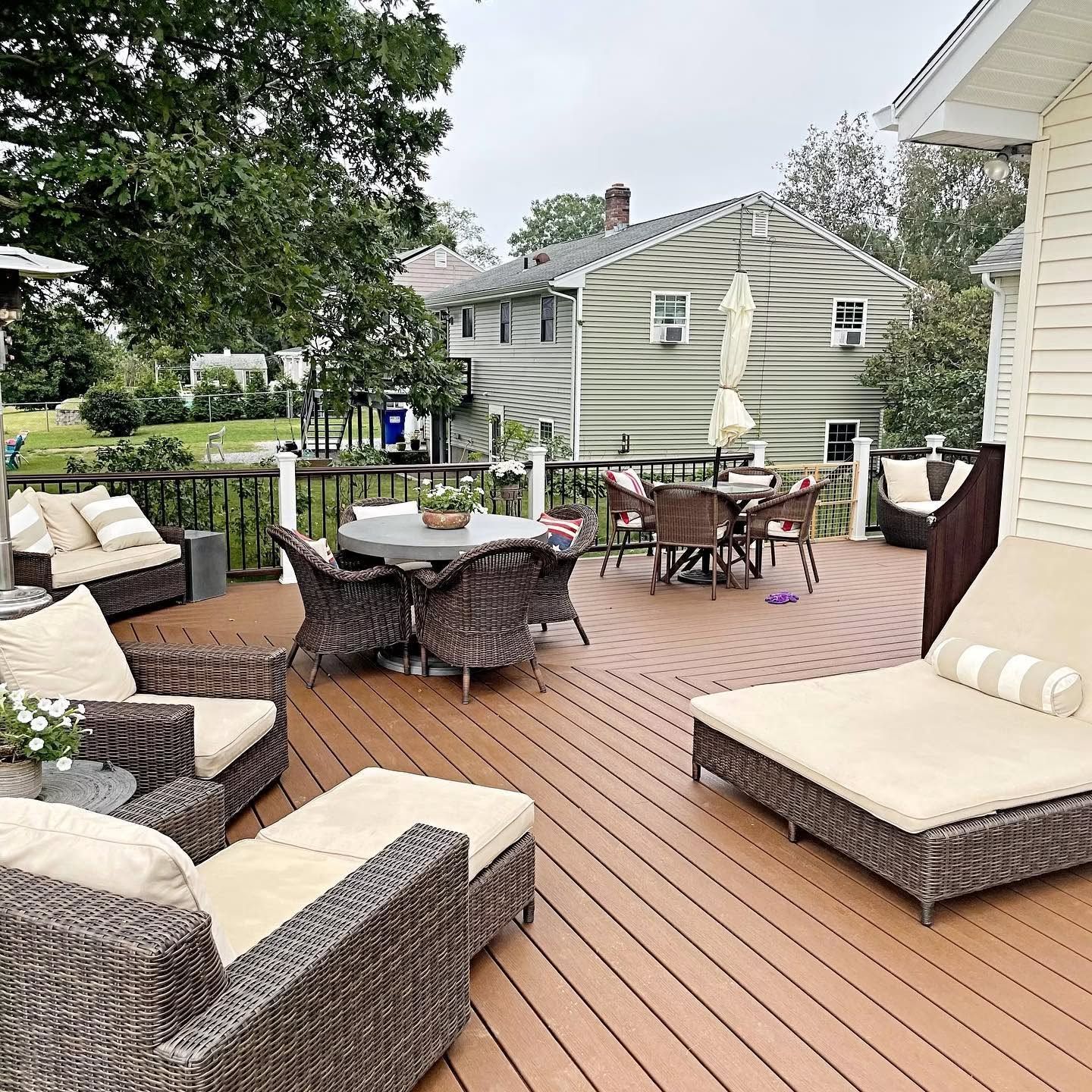
What Proper Patio Installation Requires
The decision between repairing an existing patio and replacing it entirely depends on the condition of the base beneath the current surface, not just what the surface itself looks like. Pavers that have shifted or cracked at isolated points may indicate a localized base failure that can be corrected by lifting and resetting the affected section. Widespread settling, perimeter separation, or consistent low spots across a large portion of the surface typically indicate the base wasn't compacted adequately or wasn't built to sufficient depth, and repair won't address the underlying condition. Identifying which situation applies is part of what the consultation determines before any work is proposed.
A properly installed patio shows consistent plane across its surface without visible high or low points, clean edge restraints that hold the perimeter material in alignment, and drainage that moves water off the surface rather than toward the structure or into low spots within the patio field. Those outcomes are directly tied to how the base was prepared and how grading was set during installation—not to the quality of the surface material alone.
Material selection is addressed during the consultation and is part of the free estimate. Options vary in thickness requirements, base depth specifications, and edge treatment methods, which affects both the installation approach and the long-term maintenance the surface will need. Primus Construction is licensed and insured, and the estimate is provided with no obligation to proceed.
Questions Before Starting Your Patio Project
The questions below address how patio installation decisions are made, what the work involves from base preparation through finishing, and what a properly completed installation should show.
How is the decision made between repairing and replacing an existing patio?
The site assessment evaluates whether settlement is isolated or widespread, whether the base beneath the surface is structurally sound, and whether the current grading is directing water correctly. Repair is appropriate when the base is intact and the issue is limited to a defined section; replacement is needed when base failure has affected the installation broadly.
What does base preparation involve, and why does depth matter?
Base preparation includes excavation to the required depth for the selected material, installation of compacted aggregate in layers, and verification of grade before surface material is set. The required depth varies by material—thicker pavers and concrete need deeper bases than thinner stone—and insufficient depth is the most common reason patios settle unevenly within a few years of installation.
How does grading affect the finished patio's performance?
Grading establishes the slope that moves water off the surface and away from the structure. A patio installed without proper grade drains toward the house foundation or pools within the surface field, which accelerates deterioration of both the patio material and the adjacent structure over time.
What should the finished edge treatment look like on a completed patio?
Edge restraints should hold the perimeter course of material in position without gaps or displacement, and the transition between the patio surface and adjacent lawn or hardscape should be finished cleanly without exposed base aggregate. Loose or improperly anchored edge restraint is one of the first places a patio installation shows quality shortfalls.
What maintenance does a completed patio typically require to hold its condition?
Joint sand in paver installations should be checked and replenished as needed to keep the material locked in position, and edge restraints should be inspected periodically to confirm they haven't shifted. Concrete surfaces benefit from resealing at intervals determined by surface exposure and traffic, which the material specification from the consultation will indicate.
Primus Construction also installs patios in West Hartford, Wallingford, Fairfield, Hamden, and Cheshire. To get a site assessment and a detailed estimate for your outdoor space, schedule a free consultation with Primus Construction.